Miselup: food costing for catering
Running a catering business in Spain means pricing every menu per guest, not per plate. The same dish can cost differently for a 30-person event versus a 300-person wedding, because portions, prep time, and waste change. Most restaurant software ignores this, forcing you to use spreadsheets that quickly become unreliable. Miselup is kitchen management software with an edition aimed at catering and events, and this review looks at whether it holds up on the three things that actually hurt: costing, allergens and keeping a team on the same page.
In this review, we look at how Miselup handles dynamic scaling, recipe management, HACCP temperature logs, and its three pricing tiers. We also examine its limitations, because no tool is perfect. If you are a caterer in Spain juggling quotes, events, and kitchen teams, this review will help you decide whether Miselup is worth your time and money.
Why catering costing is not restaurant costing
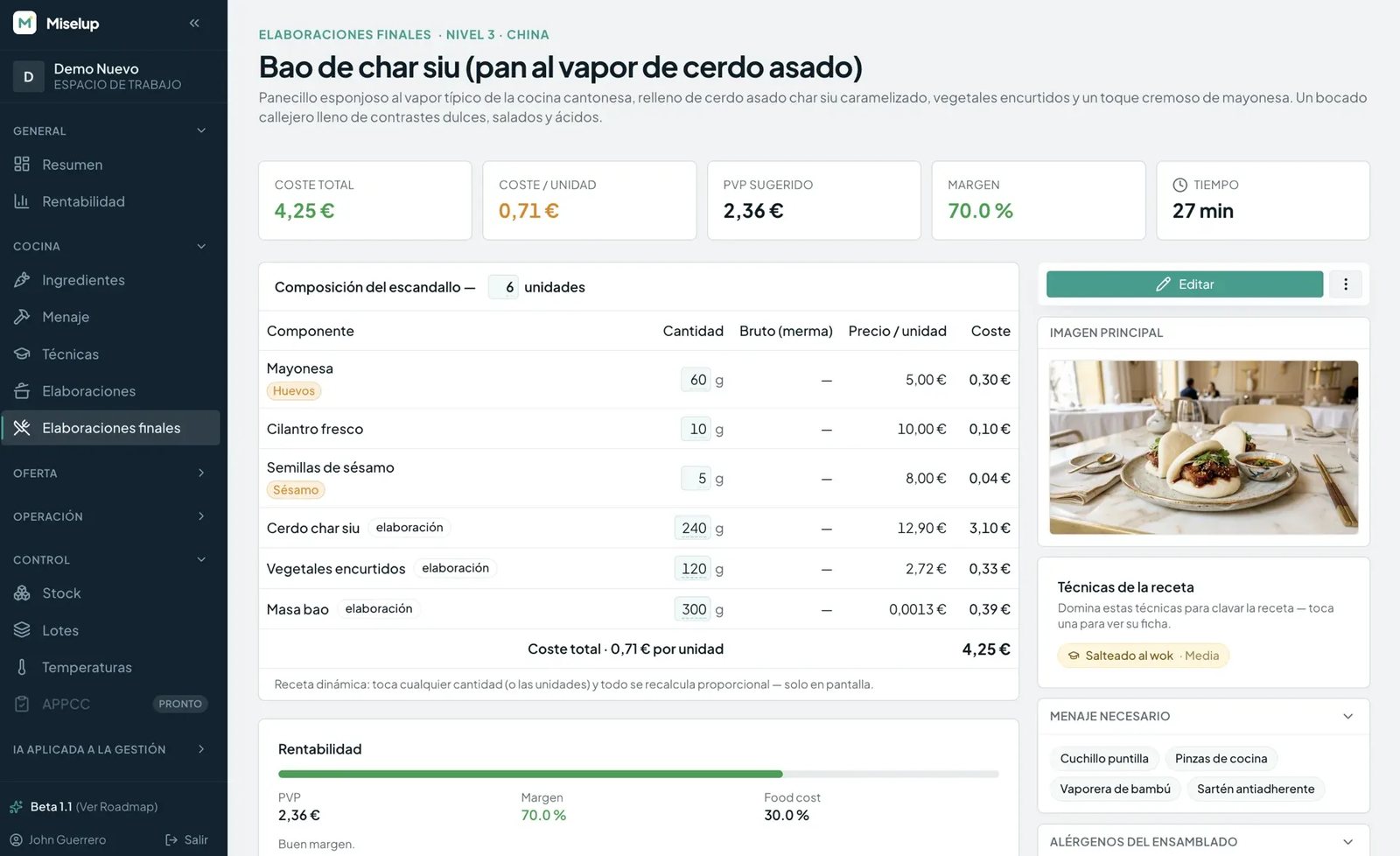
Restaurants cost per plate, assuming a fixed portion and steady demand. Catering is different: you cost per guest, and the number of guests changes everything. A menu for 30 people might use 150g of protein per portion, but for 300 people you can buy in bulk, reduce waste, and adjust portion sizes. Miselup understands this. It lets you set base recipes and then scale them dynamically per event, so the cost per guest updates automatically.
Transport shrinkage is another factor. Food loses weight and quality during transport, and you need to account for that 2-3% loss. Miselup includes a shrinkage percentage in your costing, so your margins stay accurate. It also handles casual staff costs, tableware hire, and travel expenses, which are all part of a catering quote. Restaurant software simply ignores these, leaving you to guess. With Miselup, you can build a complete cost per guest that reflects the real world.
Scaling a menu from 30 to 300 covers in a spreadsheet
Spreadsheets are flexible, but they are dangerous when you scale. Change one ingredient quantity, and you have to manually update every formula. Multiply that by dozens of recipes and hundreds of events, and errors multiply too. We have seen caterers accidentally quote a 300-person event using per-plate costs meant for 30, losing thousands. Miselup eliminates this by using a central recipe database where each ingredient has a cost and a yield.
When you create an event with 300 covers, Miselup automatically recalculates every portion, every ingredient, and every cost. You do not need to re-enter anything. Sub-recipes are nested, so a sauce used in three dishes is updated once and flows everywhere. The system also lets you adjust for bulk pricing, so your cost per unit drops when you buy more. This is something a spreadsheet simply cannot do reliably. You save hours of manual work and avoid costly mistakes.
What Miselup does for a catering kitchen
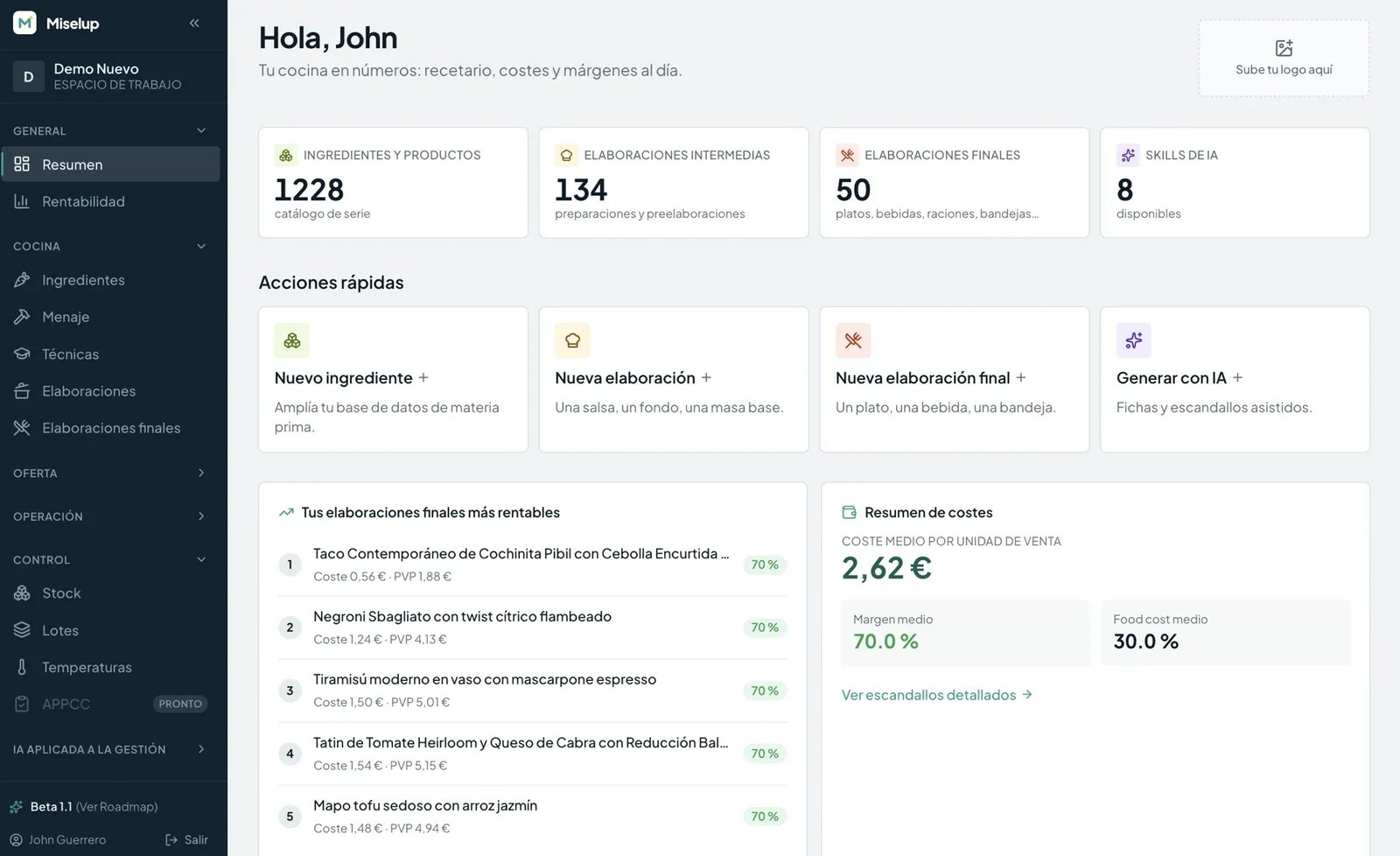
Miselup is not just a costing tool. It is a full kitchen management platform. You get dynamic costing that adjusts per event, portion scaling that works with nested sub-recipes, and a built-in catalogue of over 1,200 ingredients and 180 recipes with allergen information. This means you can quickly build a menu and know exactly what each dish costs and which allergens it contains. The allergen data is crucial for compliance with EU Regulation 1169/2011.
You also get spec sheets with photos, so your kitchen team knows exactly what the final dish should look like. Recipes can be shared by URL, which is handy for clients or staff. The Team/Kitchen mode lets you share recipes and costs with your team, but you can hide prices with a PIN, so front-of-house staff see the dish details without the financials. This keeps your margins private while ensuring everyone has the information they need.
Allergens, spec sheets and inspections
In Spain, allergen information is required by law under Regulation (EU) 1169/2011. Miselup helps you comply by storing allergen data for every ingredient and recipe. When you create a spec sheet, it automatically lists the allergens, so you can provide accurate information to clients and guests. The spec sheet also includes a photo, which is useful for training staff and ensuring consistency.
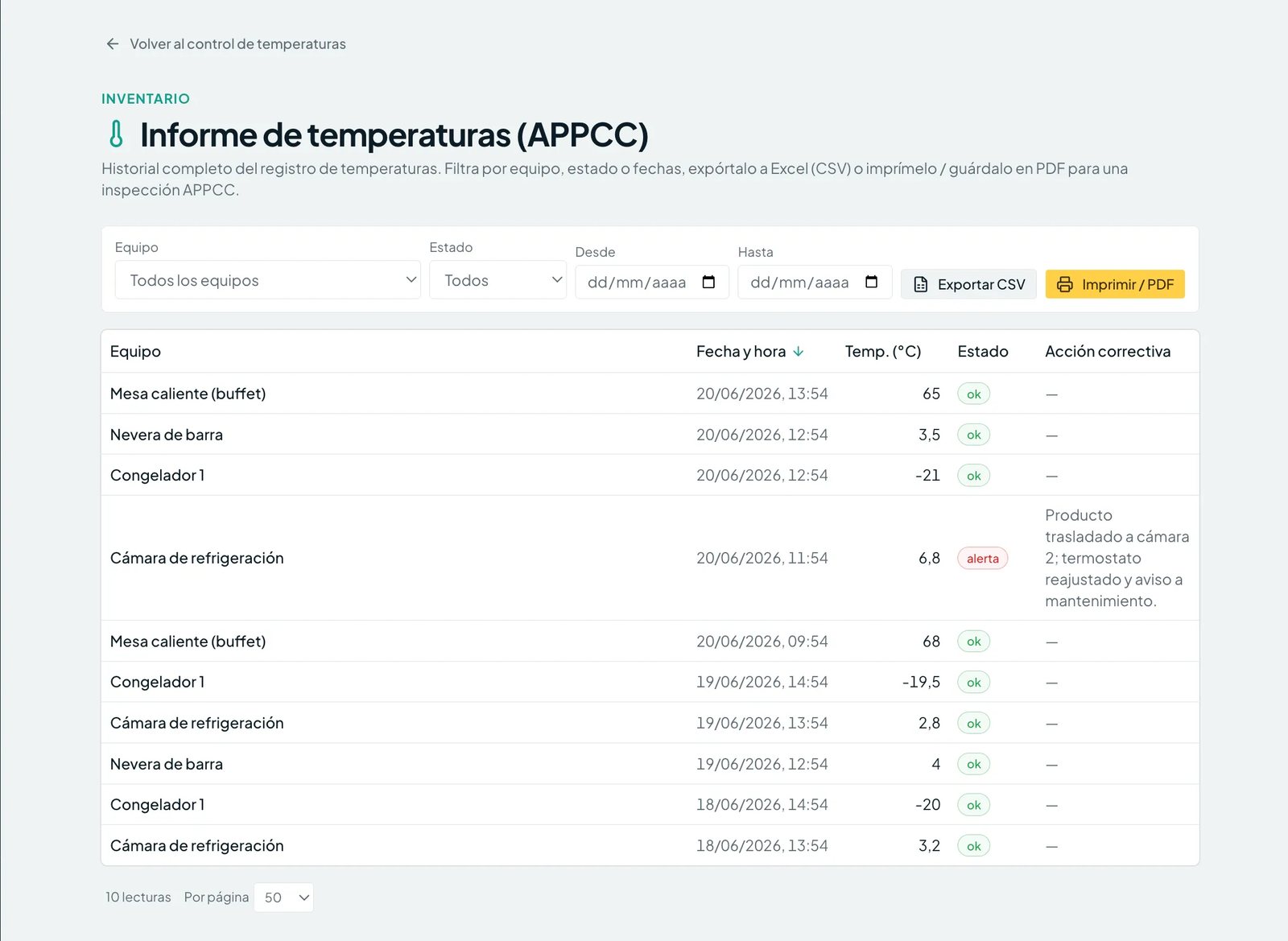
It is important to note that Miselup does not generate a legal allergen declaration. You are still responsible for verifying that the data is correct and for providing it in the required format. What Miselup does is make the process much easier. You can also log HACCP temperature checks directly in the app, with timestamps and email alerts. This helps you maintain food safety records for inspections, though you should always check local requirements. Miselup is a tool, not a substitute for professional judgement.
Plans and pricing in 2026
Miselup offers three plans. The FREE plan costs €0 per month forever, with no credit card required. It includes up to 50 recipes, the built-in catalogue of 1,200+ ingredients and 180 recipes with allergens, dynamic costing with shrinkage and margin traffic light, portion scaling, spec sheets with photo, nested sub-recipes, 3 AI imports, recipes shareable by URL, Team/Kitchen mode with PIN and no prices shown, and both Spanish and English interfaces.
The ESENCIAL plan is €19 per month or €190 per year (≈€16/month). It adds up to 250 recipes, full costings with your own ingredients and suppliers, spec sheets with photo, video and allergens, PDF and CSV export, and email support. The PRO plan is €49 per month or €490 per year (≈€41/month). It includes unlimited recipes and costings, daily P&L with break-even and budget vs actual, valued inventory with FEFO expiry, purchasing, production and mise en place, batch traceability, HACCP temperature logging with email alerts and an inspection report, profitability reports, universal AI importer, and priority support. Annual plans give you 12 months for the price of 10. Current promo: 40% off the first 3 months with code EARLYBIRD.
| Plan | Price | Recipes | Who it suits |
|---|---|---|---|
| FREE | €0/month | Up to 50 | Startups and small caterers testing the tool |
| ESENCIAL | €19/month (€190/year) | Up to 250 | Growing businesses needing exports and suppliers |
| PRO | €49/month (€490/year) | Unlimited | Professional caterers needing HACCP and P&L |
Who it is for, who it is not, and our verdict
Full disclosure first: Miselup and this directory belong to the same group, ChefBusiness Group. That is why we know the product from the inside — and why we have been careful to spell out what it does not do.
Miselup is ideal for catering companies that work with variable guest counts, need accurate per-guest costing, and want to centralise recipes, allergens, and HACCP logs. The free plan is generous enough for a small business to get real value. The scaling feature alone saves hours and prevents costly errors. The Team/Kitchen mode with PIN is a clever way to share recipes without exposing prices.
However, Miselup is not for everyone. It is not an events CRM, so do not expect commercial quoting, wedding diaries, or EPOS integration. It focuses on kitchen and recipe management, not front-office sales. Also, the free plan limits you to 50 recipes, which may be tight for a diverse menu. But for most caterers, the paid plans are reasonably priced. Our verdict: Miselup is a solid, caterer-specific tool that fills a real gap. It is not perfect, but it is far better than spreadsheets. We recommend trying the free plan.
Winning the events is what the directory is for; this is what happens afterwards, in the kitchen.
Frequently asked questions
How is catering costing calculated?
Catering costing in Miselup works per guest, not per plate. You build a recipe with ingredient costs, add a shrinkage percentage for transport and prep losses, and then scale the recipe to the number of guests. The system recalculates automatically, including bulk discounts. You can also add staff, tableware, and travel costs to get a true cost per guest.
Which app is best for catering costings?
Miselup is specifically designed for catering costings, with per-guest scaling, shrinkage, and nested sub-recipes. Other options like spreadsheets are error-prone, and restaurant POS software does not handle variable guest counts. For a dedicated tool, Miselup offers a free plan, so you can test it without risk.
What does the AI importer actually do?
The AI importer in Miselup lets you upload a recipe from a photo, PDF, or text, and it extracts the ingredients and quantities automatically. The free plan includes 3 AI imports, while the PRO plan has a universal AI importer with no limits. It saves time when digitising existing recipes, though you should always double-check the extracted data.
Is the free plan enough for a small catering company?
The free plan includes up to 50 recipes, which is enough for a small menu. You also get dynamic costing, portion scaling, spec sheets, allergen data, and team mode with PIN. If you have more than 50 recipes or need exports and supplier management, the ESENCIAL plan at €19/month is worth it.
How do HACCP temperature records work for off-site events?
Miselup lets you log temperature checks directly on your phone or tablet, with timestamps and optional photos. You can set alerts for out-of-range temperatures, and the PRO plan includes email alerts and an inspection report. This helps you maintain records for off-site events, though you should always follow local food safety regulations.
What is a sensible food cost percentage for catering?
A healthy food cost for catering is typically between 25% and 35% of the selling price. This varies by menu type, event size, and location. Miselup shows a margin traffic light in its costing, so you can quickly see if a dish falls within that range. It is a guide, not a rule. You can sanity-check it against the per-person catering prices we track in the directory.

John Guerrero
Food service consultant and founder of the ChefBusiness group. 20+ years in hospitality helping restaurants and caterers run profitably. johnguerrero.es